
When a family in Islamabad starts looking for home care, one question comes up almost every time: do we need a nurse, a caregiver, or a patient attendant? These words get used loosely, sometimes even as if they mean the same thing, but they don’t. Picking the wrong one can mean a patient doesn’t get the right kind of help, or a family pays for skills they didn’t actually need. This guide breaks down the real difference in simple terms, so you can make the right choice for your family member.
The Short Answer
- A nurse handles medical tasks — medicine, injections, wound care, and watching for warning signs of a health problem.
- A caregiver helps with daily life and general wellbeing — company, light support, and keeping an eye on the patient’s routine.
- A patient attendant helps with physical daily tasks — bathing, dressing, walking, and meals — but does not handle medical work.
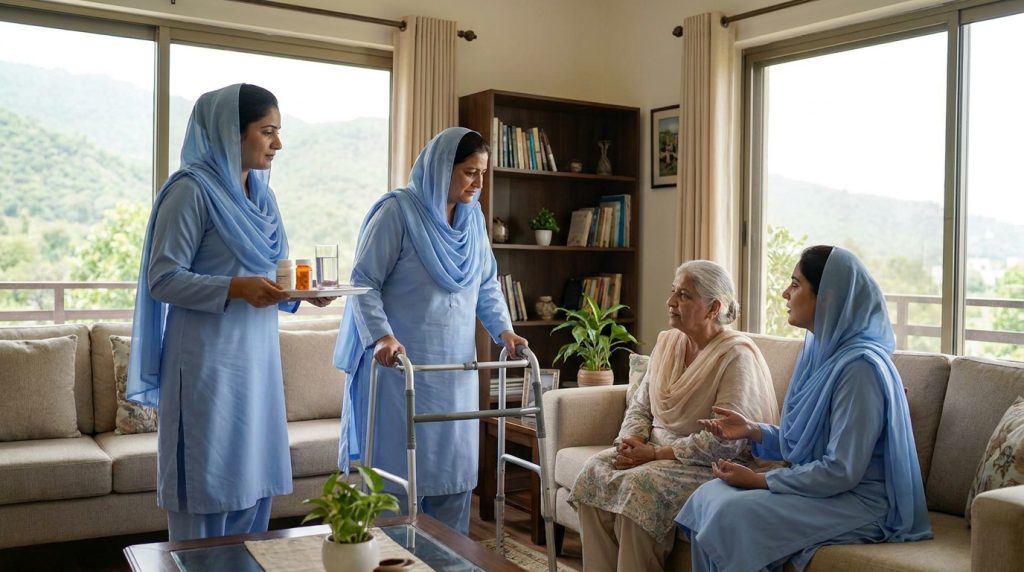
In many homes, families end up needing more than one of these, depending on the patient’s condition. Here’s how each one actually works.
What a Nurse Does
A nurse is trained in medical care. This means they can give medicine correctly and on time, handle injections and drips, change wound dressings properly, and check things like blood pressure or sugar levels. More importantly, a nurse knows how to spot early signs that something is wrong — a wound that isn’t healing the way it should, confusion that might point to an infection, or a medicine reaction that needs quick attention.
If your family member has an ongoing medical condition, just had surgery, or needs regular monitoring, a nurse is the right choice.
What a Caregiver Does
A caregiver focuses on the patient’s daily wellbeing rather than medical tasks. This usually includes keeping the patient company, helping them stay engaged during the day, gently reminding them about meals or medicine timing, and generally making sure the day runs smoothly. A caregiver is not trained to handle medical decisions or emergencies, but they play a big role in a patient’s mental and emotional health, especially for elderly patients who spend a lot of time alone otherwise.
If your family member is mostly stable health-wise but needs company and light support through the day, a caregiver often fits well.
What a Patient Attendant Does
A patient attendant supports the physical, hands-on parts of daily life. This includes helping the patient bathe and get dressed, walking with them so they don’t fall, helping with meals, and generally being present for anything physical the patient can’t manage alone anymore. Like a caregiver, an attendant does not handle medicine, injections, or wound care — that stays with a nurse.
If your family member is physically weak or needs help with basic movement and hygiene, but doesn’t have an active medical issue needing monitoring, an attendant is usually enough.
Nurse vs. Caregiver vs. Patient Attendant — Side by Side
| Nurse | Caregiver | Patient Attendant | |
|---|---|---|---|
| Gives medicine / injections | Yes | No | No |
| Changes wound dressings | Yes | No | No |
| Checks vitals (BP, sugar) | Yes | Basic awareness only | No |
| Helps with bathing/dressing | Yes | Sometimes | Yes |
| Helps with walking/mobility | Yes | Sometimes | Yes |
| Keeps patient company | Yes | Yes | Yes |
| Best for | Active medical needs | General daily wellbeing | Physical daily support |
The U.S. Bureau of Labor Statistics describes this same basic split — medical support stays with trained nursing staff, while daily living and personal care support are separate, non-medical roles. It’s the same logic families in Islamabad should use when deciding what kind of help they actually need.
How to Decide Which One You Need
Ask yourself these questions:
- Does my family member need medicine given at specific times, injections, or wound care? → You need a nurse.
- Is my family member mostly healthy but needs company and light daily support? → A caregiver may be enough.
- Does my family member need help with bathing, dressing, and walking, but no medical care? → A patient attendant fits well.
- Is it a mix of these? → This is common. Many families combine a nurse’s visits with daily attendant or caregiver support.
If you’re still unsure, that’s completely normal — this is exactly what we talk through with families during the first call, based on the patient’s actual condition.
Common Mistakes Families Make
Hiring an attendant when a nurse is needed. This is the most common and most risky mistake. If a patient needs medicine management or wound care and only has an attendant, medical warning signs can be missed.
Hiring a nurse when an attendant would do. This isn’t dangerous, but it usually costs more than necessary if the patient’s real need is daily physical support, not medical monitoring.
Assuming one person can do everything. A single caregiver or attendant cannot safely also manage medication and wound care if that’s genuinely needed — this requires a trained nurse, even if it means having both a nurse and an attendant involved.
How Shine Care Home Nursing Helps You Decide
When a family in Islamabad reaches out to us, we don’t just ask what service you want — we ask about the patient’s actual condition first. Based on that, we help you understand whether a nurse, caregiver, attendant, or a combination is the right fit, and then match staff with relevant experience for that specific situation.
We Also Serve Lahore
Shine Care Home Nursing is based in Islamabad, but the same standard of care is also available in Lahore through our sister companies. Shinecarepk.com provides nursing, caregiver, and patient attendant services for general and elderly patient care in Lahore. For more specialized needs — post-surgery recovery, ICU-level home setup, and similar clinical care — Heavencarepk.com also serves families in Lahore. Whichever city you’re in, the same approach applies: matching the right kind of help to the patient’s actual condition, not a one-size-fits-all service.
Frequently Asked Questions
In practice, yes — many attendants also provide companionship alongside physical support. The key difference to remember is that neither role includes medical tasks like medicine or wound care.
Not necessarily. If there’s no active medical condition needing monitoring, a patient attendant is usually enough for physical daily support.
Yes, but hiring a nurse for company alone is usually more expensive than needed if there’s no medical requirement. A caregiver or attendant is often a better fit for that purpose.
This is common, especially with elderly patients or those recovering from illness. We reassess and adjust the type of support as the situation changes, rather than keeping a fixed arrangement.
Yes, this happens often — for example, a nurse visiting for medicine and wound care, with a patient attendant present for daily physical support the rest of the day.
Sudden confusion, unusual behavior, or new physical symptoms should always be checked by a nurse or doctor, since these can sometimes point to an underlying medical issue rather than just normal aging.
An attendant can remind a patient to take medicine on schedule, but actually administering medication, injections, or managing complex medicine routines needs a nurse.
For most requests in Islamabad, we can usually arrange an assessment call and match the right person within a short timeframe. Urgent cases are handled with priority.
If you’re not sure whether your family member needs a nurse, caregiver, or patient attendant, reach out to Shine Care Home Nursing for an honest assessment call. We’ll ask about the situation directly and help you choose what actually fits.