
Not every patient at home needs a nurse. Sometimes what a family actually needs is someone reliable to sit with an elderly parent, help a recovering patient move around safely, or just make sure meals, hygiene, and daily routine don’t fall apart while the rest of the family is at work. That’s where a patient attendant comes in, and in Islamabad, this is one of the most requested services families ask about — usually right after they’ve already looked into nursing and realized it might be more than they actually need.
This guide breaks down what a patient attendant actually does, how it’s different from hiring a nurse, and how to know which one is right for your situation.
What Is a Patient Attendant, Exactly?
A patient attendant provides non-medical daily support for a patient at home. Think of it as trained personal assistance rather than clinical care. Attendants are not a replacement for a nurse when medical monitoring is genuinely needed, but for a large number of households, this is exactly the level of support that solves the problem.
| Attendant Handles | Attendant Does Not Handle |
|---|---|
| Bathing and dressing assistance | Medication administration (injections/IV) |
| Mobility support and walking assistance | Wound dressing or clinical wound care |
| Meal preparation and feeding support | Monitoring vitals for medical decisions |
| Companionship and daily routine | Diagnosing or responding to medical emergencies |
| Light housekeeping around the patient’s space | Managing complex chronic disease care |
Who Actually Needs a Patient Attendant in Islamabad
Families usually reach out for attendant services in a few common situations:
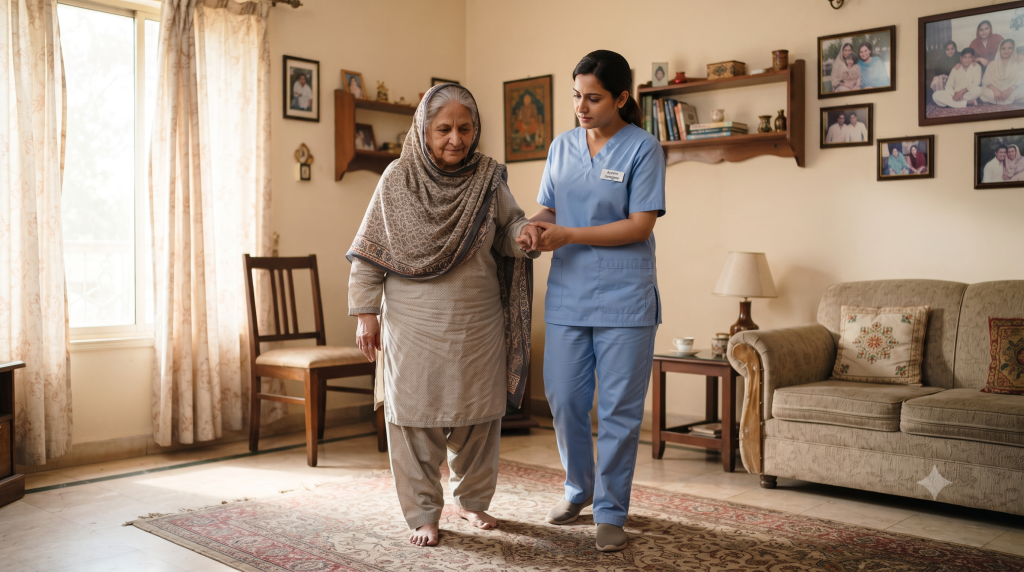
- An elderly parent who is safe health-wise but can’t manage daily tasks alone anymore
- A patient recovering from a minor procedure who just needs help getting around for a couple of weeks
- A family where everyone works during the day and no one can be home to help with an aging or disabled relative
- Someone who needs company and supervision more than medical attention — for instance, a person at risk of falling but otherwise stable
If your situation matches any of these, an attendant is often the more practical and affordable choice compared to full nursing care.
A Typical Day With a Patient Attendant
| Time | What Happens |
|---|---|
| Morning | Help with waking up, washing, dressing, and breakfast |
| Midday | Assistance with mobility, light exercise if advised, lunch preparation |
| Afternoon | Companionship, help with errands or appointments if needed |
| Evening | Dinner support, help settling in for the night, basic safety check before sleep |
This routine changes depending on the patient’s specific needs, but the core idea stays the same — someone present, attentive, and reliable throughout the day.
Patient Attendant vs. Nurse: The Real Difference
This comparison comes up in almost every conversation we have with families, so here it is clearly:
| Patient Attendant | Nurse | |
|---|---|---|
| Medical training | Basic caregiving training | Formal nursing qualification |
| Medication management | No | Yes |
| Wound care | No | Yes |
| Vitals monitoring | Basic awareness only | Clinical monitoring |
| Daily living support | Yes | Yes |
| Best suited for | Stable patients needing daily support | Patients with active medical needs |
If your family member has an active medical condition that needs monitoring, or is recovering from surgery, a nurse is the safer choice. If the main need is daily support, mobility help, and companionship for someone who is otherwise medically stable, an attendant is usually enough — and considerably more affordable.
What to Check Before Hiring an Attendant
A patient attendant is in your home every day, often alone with a vulnerable family member. Before hiring, confirm the following:
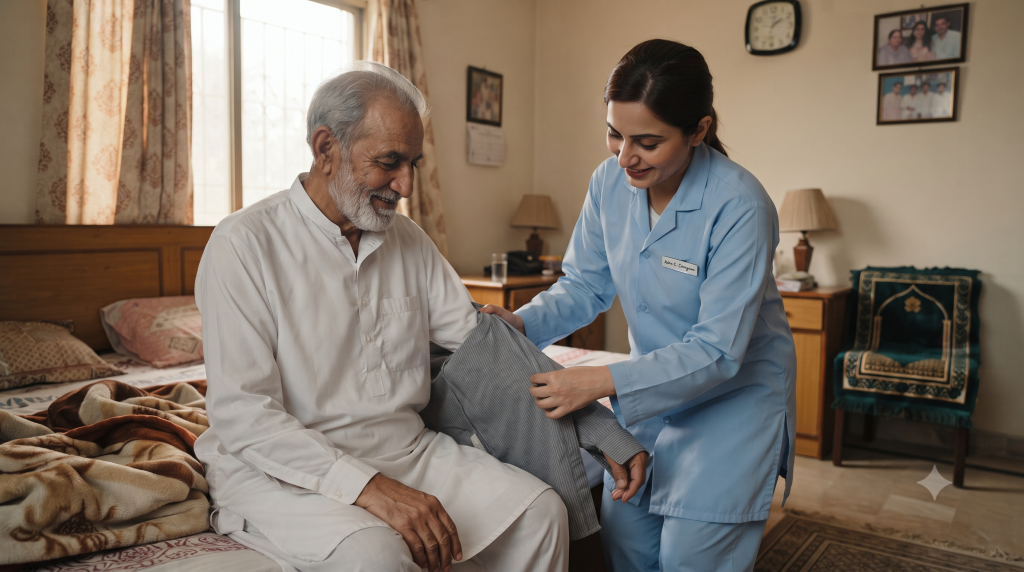
- Background verification — has the attendant’s history and references actually been checked, or just assumed?
- Basic caregiving training — proper lifting techniques, fall prevention, and hygiene support aren’t things everyone knows instinctively.
- Experience with similar cases — an attendant who has worked with elderly patients before will handle situations more calmly than someone without that background.
- A clear replacement policy — what happens if the assigned attendant can’t come one day? This should be settled before you need the answer, not after.
- Communication and patience — especially important if the patient has memory issues or gets anxious easily.
At Shine Care, every attendant we place goes through a background check and basic caregiving orientation before being matched with a family. We also ask specifically about the patient’s daily routine and personality so the match actually fits, rather than sending whoever happens to be available.
How Booking Works
- Initial conversation — we ask about the patient’s condition, daily routine, and what kind of support the family actually needs.
- Matching — we assign an attendant whose experience and temperament suit the situation.
- Care begins — the attendant follows an agreed daily routine, with flexibility as needs change.
- Ongoing check-ins — we stay in touch to make sure the arrangement is actually working for the family, not just assumed to be fine.
If you’re unsure whether you need an attendant or a full nurse, that’s a completely normal question to have — we walk through it with every family during the initial call, based on the patient’s actual condition rather than guessing.
Frequently Asked Questions
An attendant can remind a patient to take medicine on schedule, but administering injections, IV medication, or managing complex medication routines is a nurse’s responsibility, not an attendant’s.
It depends on the parent’s health condition. If they’re medically stable but need daily support and companionship, an attendant is usually sufficient. If there’s an active medical condition needing monitoring, a nurse is the safer option.
Yes, attendants can be arranged for specific shifts — daytime only, overnight only, or full 24-hour coverage — depending on what the family actually needs.
Attendants are generally more affordable than nurses, since the service doesn’t include clinical training or medical responsibilities. Exact rates depend on shift length and coverage — we can walk you through current pricing on request.
This depends on availability, but for most requests in Islamabad, we can typically arrange an assessment call and match an attendant within a short timeframe. Urgent cases are handled with priority.
If you’re trying to figure out whether an attendant or a nurse is the right fit for your family member, reach out to Shine Care for an honest assessment call — we’ll walk through the patient’s actual needs with you before recommending anything.