A stroke changes everything overnight. One day your father is walking around the house normally, and the next, he can’t lift his left arm properly, or his speech is slurred, or he’s struggling to swallow food without choking. Families in Islamabad going through this often feel completely unprepared, not because they don’t care, but because nobody explains what comes after the hospital discharges the patient.
That gap — between leaving the hospital and actually knowing how to manage daily life afterward — is where home nursing for stroke patients becomes essential. This guide walks through what that care actually looks like, why timing matters so much, and what to look for when choosing a nurse for a stroke patient at home.
Why Stroke Recovery Is Different From Other Post-Hospital Care
Stroke recovery isn’t just about physical healing. It usually involves a combination of physical, speech, and sometimes cognitive challenges, all happening at the same time. According to the World Health Organization’s stroke fact sheet, rehabilitation is a critical part of stroke recovery and should begin as early as possible — ideally within the first few days after the patient is medically stable — because early, consistent support significantly improves the chances of regaining independence.
This is exactly why stroke patients need a different kind of home care than, say, someone recovering from a routine surgery. It’s not just about monitoring vitals. It’s about helping someone relearn parts of daily life that used to be automatic.
What Home Nursing for Stroke Patients Actually Involves
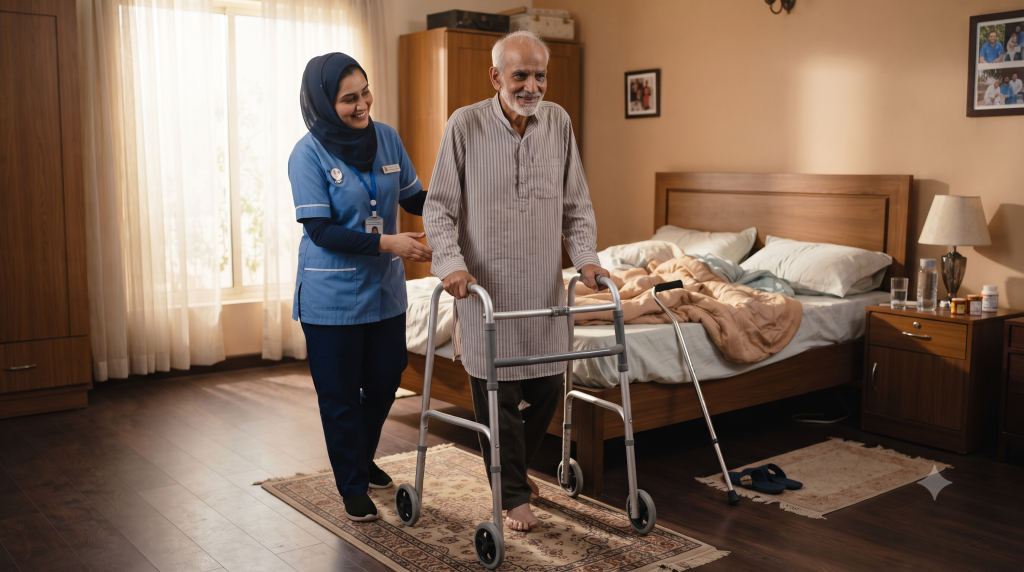
Mobility and physical support. Many stroke patients experience weakness or paralysis on one side of the body. A nurse helps with safe movement, positioning in bed to prevent bedsores, and supporting basic physiotherapy exercises between formal physiotherapy sessions.
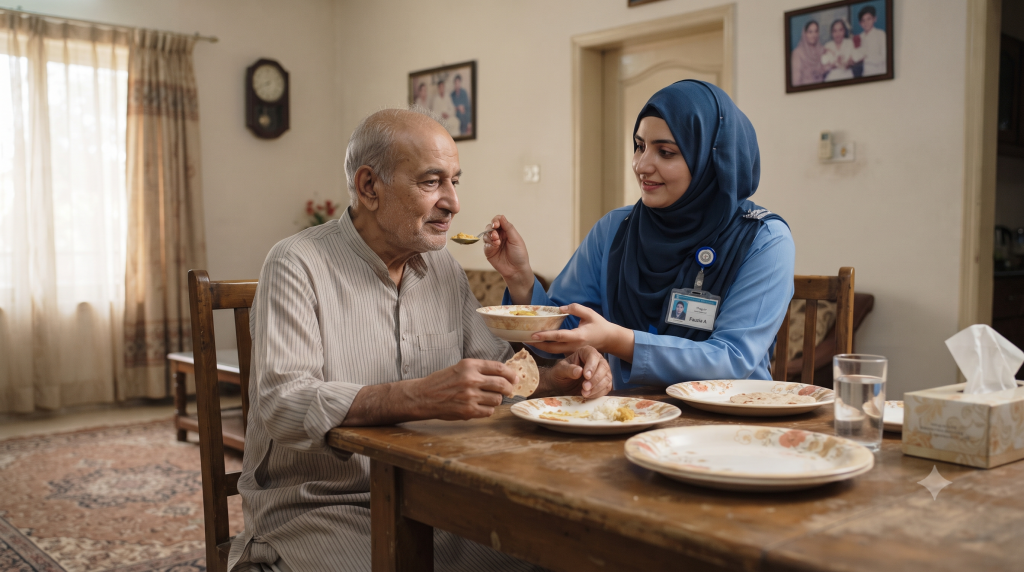
Speech and swallowing support. Stroke often affects speech clarity and, in some cases, the ability to swallow safely. A nurse trained in stroke care knows how to assist with feeding safely, watching for signs of choking risk, and encouraging speech practice in simple, patient ways.
Medication management. Stroke patients are typically on medications to prevent a second stroke, manage blood pressure, and sometimes control blood sugar. Missing doses or mistiming them isn’t a small issue here — it directly affects recovery and future risk.
Monitoring for warning signs. A nurse watches for signs of a second stroke, changes in consciousness, or sudden new weakness, and knows the difference between normal recovery fluctuation and something that needs immediate medical attention.
Emotional and cognitive support. Depression and frustration are extremely common after a stroke, especially when a patient who was previously independent suddenly needs help with basic tasks. A nurse who’s present daily can notice withdrawal or low mood early and encourage the kind of engagement that actually helps recovery, rather than just managing physical needs and leaving emotional wellbeing unaddressed.
Why Early, Consistent Care Matters So Much
The WHO has highlighted that being as independent as possible is the central goal of rehabilitation after a condition like stroke, and that consistent support — rather than occasional check-ins — tends to produce better outcomes over time. This matters a lot for families deciding between occasional visits and full daily home nursing.
A stroke patient’s needs on day three after discharge look very different from their needs on day thirty. Early on, the focus tends to be on safety, basic mobility, and preventing complications like bedsores or aspiration during feeding. As weeks pass, the focus shifts toward building independence — encouraging the patient to do more on their own, safely, with the nurse supporting rather than doing everything for them. A rigid, one-size-fits-all care plan misses this shift, which is why ongoing reassessment matters as much as the initial care plan.
Signs a Stroke Patient Needs Full-Time Home Nursing
Not every stroke patient needs the same level of care, but these signs usually point toward needing more consistent, hands-on support:
- Difficulty walking or standing without help
- Weakness or paralysis affecting one side of the body
- Trouble swallowing food or liquids safely
- Slurred speech or difficulty communicating needs clearly
- Confusion, memory issues, or sudden mood changes
- A family unable to provide round-the-clock supervision due to work or other responsibilities
If several of these apply, especially in the weeks right after hospital discharge, full-time or near-full-time home nursing is usually the safer option compared to occasional visits.
What to Check Before Hiring a Stroke Care Nurse in Islamabad
Stroke care requires specific knowledge that general home nursing doesn’t always cover. Before hiring, confirm:
Experience with stroke-specific care, not just general elderly or post-surgical nursing. Stroke recovery has its own risks and routines that differ from other conditions.
Training in safe feeding and swallowing support, since this is one of the more serious risks in early stroke recovery if handled incorrectly.
Knowledge of physiotherapy basics, since a nurse who understands the physiotherapy plan can support it consistently between formal sessions, rather than the patient losing progress on days without a scheduled therapist visit.
A clear plan for recognizing emergencies, including signs of a possible second stroke, which is a real risk that families need a nurse trained to catch early.
Genuine patience with communication difficulties. A nurse who gets frustrated with slow or unclear speech isn’t the right fit, no matter how strong their other clinical skills are.
At Shine Care Home Nursing, our nurses working with stroke patients are specifically matched based on prior experience with stroke recovery cases, not assigned generically from a general nursing pool. This distinction matters more in stroke care than almost any other condition we support.
How the Process Works
- Initial assessment. We discuss the stroke’s severity, which side of the body is affected, speech and swallowing status, and the hospital’s discharge recommendations.
- Nurse matching. We assign a nurse with relevant stroke care experience, matched to the specific challenges the patient is facing.
- Care begins at home. The nurse follows the discharge and physiotherapy plan, manages medication, and supports daily mobility and communication practice.
- Ongoing reassessment. As recovery progresses — and it usually does, even if slowly — we adjust the care plan to match the patient’s current needs rather than sticking to the original plan indefinitely.
If you’d like to understand costs involved, our full pricing breakdown for home nursing services in Islamabad is available separately, so you can plan ahead properly.
Frequently Asked Questions
As soon as possible after hospital discharge, ideally within the first few days. Early, consistent support is strongly linked to better long-term recovery outcomes.
Yes, a nurse trained in stroke care can assist with safe feeding techniques and support basic speech practice, though formal speech therapy from a specialist is usually still recommended alongside this.
This is expected and normal. A good home nursing plan is reassessed regularly, shifting from close supervision early on toward supporting greater independence as the patient improves.
Typically, a physiotherapist visits separately for formal sessions, while the home nurse supports the exercises and movement guidance between those sessions to keep progress consistent.
If there’s difficulty with walking, swallowing, or communication, or if no family member can supervise consistently, full-time or near-full-time care is usually the safer choice, at least through the early weeks of recovery.
If a family member in Islamabad has recently had a stroke, reach out to Shine Care Home Nursing as early as possible after discharge. The first few weeks matter enormously for recovery, and having the right support in place from day one makes a real difference.